Intro
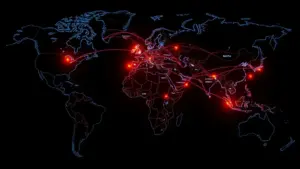
Cyber attack today has become a hot topic, with incidents making headlines around the world almost daily. The digital landscape is continuously shifting, and as organizations and individuals become more reliant on technology, the risk of falling victim to cyber threats grows. Each day, businesses, governments, and ordinary users face new challenges posed by hackers, making cybersecurity an ever-evolving field.
This article dives into the current state of cyber attacks, providing real-time insights, examples, and strategies for staying safe. With recent spikes in ransomware, phishing scams, and data breaches, defending against these dangers is more important than ever. We’ll reveal common tactics used by cybercriminals, share best practices, and spotlight solutions like Boteraser that help guard against digital threats.
⚠️Whether you’re running a business, managing IT infrastructure, or simply using the internet at home, understanding cyber attack today is vital to keeping your data and resources secure.
The Escalating Reality of Cyber Attacks Today🔑
Cyber attacks have surged in recent years, impacting every sector from healthcare to finance. As digital transformation accelerates globally, cybercriminals have found new vulnerabilities to exploit. According to the 2023 Cost of a Data Breach Report by IBM, the global average data breach cost reached a record $4.45 million, up 15% over the past three years (IBM).
Several high-profile breaches have occurred just in the past months. For example, in early 2024, multiple hospitals faced ransomware attacks that crippled medical systems and forced critical care delays. Similarly, a major financial services provider lost customer trust after millions of records were exposed due to a sophisticated phishing campaign.

The most common types of cyber attack today include:
• Ransomware attacks that lock users out of their data
• Phishing schemes that trick users into revealing login credentials
• Distributed Denial-of-Service (DDoS) attacks overwhelming servers
• Malware infiltrations compromising sensitive data
No organization is too small or unimportant for attackers. Small and medium businesses are just as frequently targeted as global enterprises. Being aware of these threats and knowing how to respond is essential for everyone.
How Cyber Attacks Unfold: Common Tactics and Trends👨💼
Today’s cyber attacks are more complex and targeted than ever before. Hackers employ a range of tactics to gain unauthorized access to systems. Social engineering remains a favorite, preying on human error rather than technical weakness. For instance, an employee receiving what looks like a legitimate email from IT support might unknowingly hand over sensitive information.
Another trend to watch is the rise of supply chain attacks, where hackers breach third-party vendors to access larger networks. In 2021, the infamous SolarWinds attack demonstrated how compromising a single software supplier could ripple through government and private sector clients.
Highly automated bot attacks have also increased, targeting login pages and web forms to steal credentials or launch further assaults. Tools like Boteraser are specifically designed to detect and block automated malicious traffic, lowering the risk of both DDoS and credential-stuffing attempts.
Emerging cyber attack today trends:
• Increased use of AI by attackers to craft convincing fake emails
• More frequent zero-day exploits, targeting unpatched vulnerabilities
• Botnets orchestrating large-scale automated attacks
• Cross-platform malware hitting traditional PCs and mobile devices alike
Real-World Examples of Recent Cyber Attacks🗂️
Recent headlines showcase the severity of cyber attacks today. In early 2024, a large European university was forced offline for several days following a ransomware event, impacting virtual classrooms and research access. The attackers demanded a substantial cryptocurrency payoff for the decryption key.
In another example, a municipal transit system in North America experienced a cyber attack that disrupted ticketing services and digital signage throughout the city. Investigators traced the incident back to phishing emails embedded with malware attachments, demonstrating how quickly basic mistakes can escalate.
Small businesses have suffered, too. One manufacturing firm reported production delays and lost contracts after cybercriminals infected their network with spyware downloaded by an employee clicking a suspicious link.
These incidents underline that cyber attack today is not theoretical—it’s happening now, with tangible impacts on real people and businesses.
The Immediate and Long-Term Impacts of a Cyber Attack Today📶
The fallout from a modern cyber attack extends far beyond initial disruption. Sensitive information may be stolen, resulting in identity theft or intellectual property loss. Organizations face costly system recovery and legal fees, potential regulatory penalties, and damage to reputation.
For companies, downtime can mean lost revenue, breached partner trust, and customer churn. The Ponemon Institute found that organizations with poor incident response suffered $5.29 million average data breach costs, compared to $3.49 million for those with robust plans (Ponemon Institute).
Long-term, a history of cyber incidents can increase insurance premiums, deter investors, and strain relationships with both vendors and clients.
Impact breakdown:
• Immediate service outages and business interruptions
• Data loss and privacy violations
• Legal and regulatory costs
• Reputational damage and loss of trust
• Long-term financial repercussions
Cyber Attack Today: Prevention Strategies🧾
Staying ahead of the cyber attack curve means implementing a multi-layered defense strategy. Organizations should start with baseline security hygiene—patching systems regularly, enforcing strong password policies, and training employees in cybersecurity awareness.
Deploying advanced threat detection solutions significantly reduces risk, as does segmenting networks to limit breach spread. Automated tools like Boteraser can monitor internet traffic in real time, block suspicious IP addresses, and mitigate DDoS attempts without manual intervention 🛡️.
For individuals, using unique passphrases, enabling two-factor authentication, and updating devices regularly are simple yet effective steps.
Proactive prevention measures:
• Employee training to spot phishing attempts
• Strict access controls, using the principle of least privilege
• Regular backups and tested disaster recovery plans
• Deployment of anti-bot and DDoS mitigation tools like Boteraser
• Continuous monitoring for breaches and unusual activity
Subsection Title: The Changing Face of Ransomware🔄
Ransomware has evolved from indiscriminate attacks to highly targeted campaigns. Today’s cyber attackers often conduct extensive reconnaissance, customizing their approach to maximize the chances of payout.
Instead of simply encrypting data, modern ransomware groups now double extortion: they also threaten to release sensitive information publicly unless paid. This strategy puts extra pressure on victims—especially organizations working with sensitive personal or financial data.

Authorities caution against paying ransoms, as it encourages further attacks and may not guarantee data restoration. Investment in secure backups and rapid response plans is the best insurance for businesses and institutions.
Comparison Table: Cyber Attack Prevention Tools🗃️
| Feature | Boteraser | Traditional Firewall |
|---|---|---|
| Blocks Automated Bots | Yes | No |
| DDoS Mitigation | Active, real-time | Limited |
| IP Reputation Checks | Automatic | Manual or limited |
| User-Friendly | Simple dashboard | Technical configuration |
| Cost-Effective | Flexible plans | Often expensive |
Best Practices for Organizations Responding to an Attack🧬
No system is perfectly immune, and when a cyber attack today occurs, a strong, coordinated response is vital. Organizations should have an incident response plan that assigns clear roles, detailing communication strategies, containment steps, and forensic investigation processes.
Regular tabletop exercises can help teams practice their response, minimizing panic and delays. Immediate actions should prioritize isolating affected systems, notifying stakeholders, and preserving evidence for later review.
Engaging with cyber insurance providers, legal counsel, and law enforcement (where applicable) early in the process can speed up recovery and mitigate liability.
The Role of Cyber Threat Intelligence🧰
Cyber threat intelligence (CTI) data provides valuable insights into evolving adversary tactics and upcoming risks. Organizations monitoring CTI feeds are better positioned to anticipate threats and patch systems proactively.
By subscribing to global intelligence platforms, businesses can stay ahead of zero-day exploits and coordinate rapid defense. CTI also empowers automated security solutions like Boteraser to update protection rules in response to new attack patterns—offering near real-time adaptation against cyber attack today.
Open-source threat intelligence resources are available from agencies like CISA (CISA Alerts), enabling even smaller companies to benefit from world-class analysis.
DoS and DDoS Attacks: Growing Challenges for Online Services🎣
Denial-of-service (DoS) and distributed denial-of-service (DDoS) attacks remain a persistent threat to online operations. These attacks flood targeted servers with overwhelming traffic, often using vast botnets of hijacked devices.

Major websites and services, including government portals and e-commerce giants, report regular DDoS encounters aimed at extorting money or silencing content. In 2022, over 20% of all DDoS attacks targeted financial institutions, according to Kaspersky (Kaspersky DDoS Report).
Mitigating these attacks requires advanced traffic filtering and rate-limiting technologies. Boteraser leverages machine learning to distinguish legitimate users from bots, providing a robust shield for businesses large and small.
Staying Safe: What You Can Do Right Now🎯
For both organizations and individuals, simple actions can lower the risk of falling victim to a cyber attack today. Keeping software updated, vetting unfamiliar downloads, and monitoring accounts for unusual activity are essential steps.
Businesses should invest in layered security solutions—including DDoS mitigation, threat intelligence, and employee training. Home users benefit from secure routers, awareness of social engineering techniques, and strong privacy habits.
Remember: cybersecurity is an ongoing process. As attackers evolve, so must your defenses.
Quick action checklist:
• Update all applications and operating systems
• Enable multi-factor authentication everywhere possible
• Use reputable anti-malware software
• Schedule regular security awareness training
• Consider solutions like Boteraser for comprehensive protection
Cyber Attack Trends: 2025 and Beyond⚙️
Looking forward, the landscape of cyber attack today is only expected to become more sophisticated. Increased adoption of AI by both attackers and defenders will raise the stakes in this digital arms race.
Experts predict a rise in attacks on smart devices (IoT), expanded targeting of critical infrastructure like energy grids, and new phishing methods exploiting generative AI to craft compelling lures. Remote work trends also introduce unique vulnerabilities that organizations must address.
An agile, proactive security culture—embracing tools like automation, threat intelligence, and advanced bot mitigation—will be key to staying ahead of tomorrow’s threats.
Try Boteraser Risk-Free
👉 Sign up for a 7-day Free Trial