
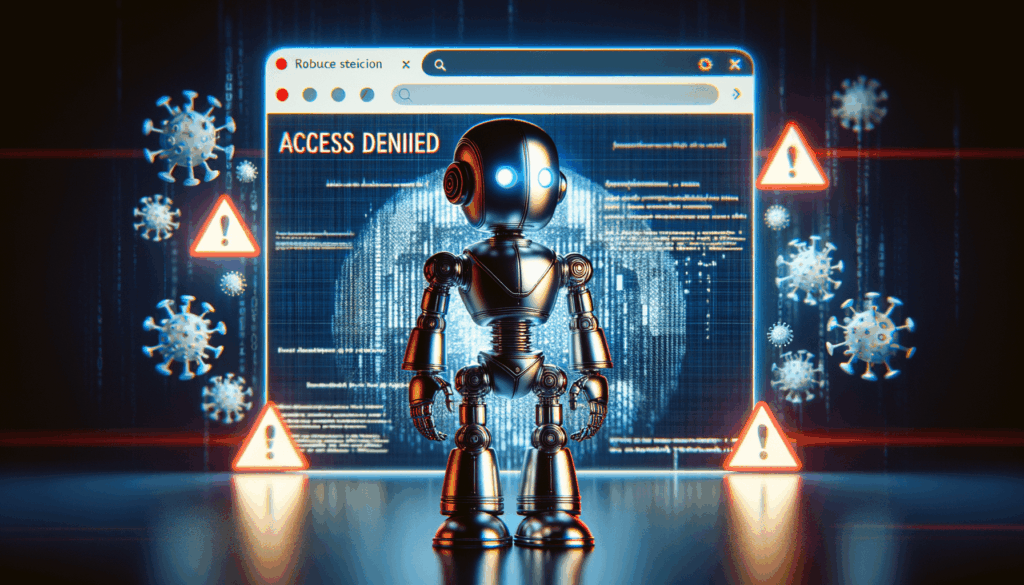
Intro In today’s digital landscape, websites have become prime targets for automated bots—ranging from legitimate...

Intro
Malicious 🤖 bots are becoming increasingly 🧠 sophisticated, accounting for 30% 📈 of all internet traffic, according to Imperva’s 2024 Bad Bot Report. From scraping 📋 valuable content and launching 🔐 credential stuffing attacks to executing DDoS 🌩️ assaults, these bots can cause serious 💣 damage to your website, reputation, and 💰 revenue. In this guide, we’ll break down exactly how you can stop 🚫 malicious bots before they hurt your online assets.
1️⃣ Understanding Malicious Bots
Before you can stop them, you need to understand what they are and how they operate. Malicious 🤖 bots are automated programs designed to perform harmful tasks. Unlike good bots (like 🔍 search engine crawlers or 📈 monitoring agents), these mimic 👤 humans to sneak past security.
Malicious bots can take many forms and serve a variety of nefarious purposes. Some are programmed to launch large-scale attacks, such as Distributed Denial of Service (DDoS) attacks, overwhelming websites with fake traffic until they become unusable. Others are used for data scraping, silently harvesting sensitive information like email addresses, personal details, or pricing data from websites without permission. Some bots are designed for credential stuffing, trying thousands of stolen usernames and passwords in rapid succession to gain unauthorized access to accounts.
What makes these bots especially dangerous is their ability to disguise themselves as legitimate human users. They may simulate mouse movements, keyboard strokes, or even browser fingerprints, making it difficult for traditional security systems to detect them. In some cases, malicious bots work together in coordinated networks known as “botnets,” making their activities even harder to trace and stop.
To effectively defend against these threats, it’s important to recognize the different ways bots can infiltrate your systems and the techniques they use to avoid detection. Only by understanding their behaviors and patterns can you put the right defenses in place to stop them and protect your online assets.
🕷️ Common bad bots:
- Credential stuffing 🤖 using stolen 🔑 logins.
- Content scraping 🤖 stealing your 📄 intellectual property.
- Spam bots 🗑️ flooding forms with junk.
- Scalping bots 🛒 buying limited items unfairly.
A 2023 study from Cloudflare showed nearly 1 in 3 login attempts came from malicious 🤖 bots.
💡 Takeaway: Not all bots are bad, but bad ones are sneaky, fast 🚀, and dangerous 💣. Know your enemy!
2️⃣ Deploying Bot Detection & Management Solutions
Stopping bad bots is an essential part of modern cybersecurity and online safety. It involves not just recognizing their presence but actively detecting their activities and implementing effective ways to block them from interacting with your systems or websites. These malicious bots can range from simple spam agents that flood comment sections or forms, to sophisticated, malicious entities designed to scrape sensitive data, carry out distributed denial-of-service (DDoS) attacks, or infiltrate networks for fraudulent activities.
To effectively combat these threats, organizations need to employ advanced tools and techniques that combine cutting-edge technology, behavioral analysis, and comprehensive data insights. One of the key components in fighting bad bots is utilizing tools integrated with artificial intelligence (AI) — often referred to as 🧠 AI.

By combining IP intelligence with behavior analysis and AI, organizations create a multi-layered defense system that significantly reduces the risk posed by bad bots. In summary, effectively stopping bad bots requires a comprehensive approach that involves detecting suspicious activity through intelligent analysis, behavioral insights, and detailed IP data. Leveraging tools equipped with 🧠 AI, scrutinizing user behavior, and utilizing 📡 IP intelligence enables websites and networks to stay resilient against malicious automated threats. As bad actors continue to evolve their methods, staying ahead with advanced, adaptive solutions is vital to maintaining the security, integrity, and optimal performance of online platforms.
🔧 Top Bot Tools:
- Cloudflare 🛡️ – Real-time bot filtering with CDN.
- DataDome 🏪 – Low-latency defense for 🛍️ eCommerce.
- PerimeterX 🔐 – Behavior-based protection for logins.
These tools analyze 🧠 patterns, use JavaScript challenges, 🧩 CAPTCHA, and fingerprinting to block 🤖 in real-time.
According to Gartner, advanced bot tools reduce 👎 bot fraud by 90% ✅.
🛠 Tip: Use layered defense: rate-limiting ➕ behavior analysis.
3️⃣ Use Rate Limiting & IP Reputation Services
Rate limiting, often referred to simply as “limit,” is a crucial technique used in many online systems and services to regulate the number of requests a user or a client can make within a specified period of time. This mechanism serves as a safeguard to ensure the stability, security, and fairness of a digital platform. Essentially, it sets a cap on how many requests—such as data retrievals, API calls, or interactions—a user or an automated program can perform within a given timeframe, often measured in requests per second, minute, or hour.
In the digital ecosystem, bots—automated scripts or programs designed to perform repetitive tasks—are notorious for flooding systems with an overwhelming number of requests. Some bots are harmless, performing functions like indexing webpages for search engines or automating routine tasks. However, malicious bots, or even overly aggressive legitimate bots, can send hundreds or even thousands of requests per minute. This rapid-fire activity can quickly overload servers, cause slowdowns, or even lead to crashes, disrupting service for genuine users.
Link this with IP blacklists like:
Also, consider 🌐 geo-blocking for unwanted 🌎 regions.
📌 Takeaway: Rate limiting = both ⚡ performance & 🛑 bot warning system.
4️⃣ Implement CAPTCHA 🧩 & JavaScript 🖥️ Challenges
CAPTCHAs are still effective 🧱. Use:
- Google reCAPTCHA ✅
- hCaptcha 🤖🧠
For tougher bots: Invisible CAPTCHAs 👻 + JS fingerprinting 🖐️ = harder to beat.
Cloudflare, for instance, uses JavaScript 🧪 to test behavior 🧬 silently.
⚠️ Don’t overuse! Too many CAPTCHAs = bad 🧑💻 user experience.
🔐 Tip: Place CAPTCHAs at 🔑 login, sign-up 📋, and contact 📨 forms.
5️⃣ Monitor Logs 📜 & Use Anomaly 🔍 Detection
Your logs 📝 = your security camera 🎥. Use them!
Set up:
- ELK Stack 🐘📊
- Grafana + Loki 📈🧪
Look for:
- Spikes 📈 from one IP.
- 📁 404s (scanners).
- Failed login 🔐 storms.
Add anomaly detection 🔍 to auto-alert you ⚠️. SANS Institute found that anomaly detection cuts bot downtime by 35% ⏱️.

📣 Takeaway: Logs reveal bot footprints 🐾 before trouble starts.
6️⃣ Harden Your 🌐 Website & APIs
Bots 🤖 love vulnerabilities 🕳️. Don’t leave doors 🚪 open.
Bots 🤖 are constantly on the lookout for vulnerabilities 🕳️ in your systems. If you leave any doors 🚪 open—whether it’s unpatched software, weak passwords, or unsecured endpoints—they’ll find and exploit them. Protect your assets by securing every entry point and staying vigilant against potential threats. Don’t make it easy for attackers!
🔐 Best Practices:
- Update 🔄 CMS, plugins 🔌, and libraries 📚.
- Disable unused APIs 🔕.
- Use strong auth 🔑 (OAuth, API keys 🔐).
Scan regularly with:
- OWASP ZAP ⚡
- Netsparker 🛠️
💡 Tip: Think like a 🕵️ hacker. Test 🧪, scan, patch.
🏁 Conclusion: Stay 🚨 Proactive, Not 🧯 Reactive
Stopping 🤖 bots = many layers 🧅. Stay alert 👁️, use tools 🧰, keep learning 📘.
“The best defense is a good offense.” — Troy Hunt 🧑💻, Have I Been Pwned 👀 creator
✅ In Summary:
- 👀 Know bots
- 🤖 Use detection
- 📉 Rate limit & block IPs
- 🧩 Use smart CAPTCHAs
- 📜 Monitor logs
- 🔐 Secure everything
📚 More Reading:
Take these steps 🚶♂️ to protect your data 💾, secure your site 🏰, and build trust 🤝. Stay ahead 🏃—before the bots do! 🤖🚫

Block Harmful Traffic and Keep Your Website Safe🛡️🌐
Learn effective strategies for blocking harmful traffic and keeping your website safe from cyber threats....
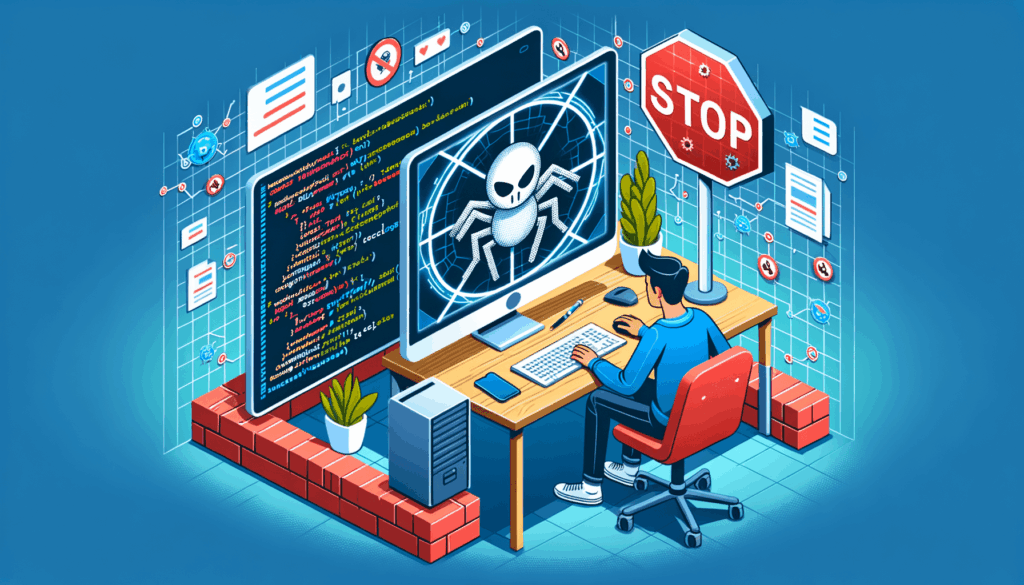
How to Stop Malicious Bots Before They Damage Your Site 🤖🚫
Learn effective strategies to detect, block, and prevent malicious bots from harming your website and...
