

🛡️ CVE-2024-24808 — pyload
Description
pyLoad open redirect vulnerability due to improper validation of the is_safe_url function
Summary
Open redirect vulnerability due to incorrect validation of input values when redirecting users after login.
Details
pyload is validating URLs via the get_redirect_url function when redirecting users at login.
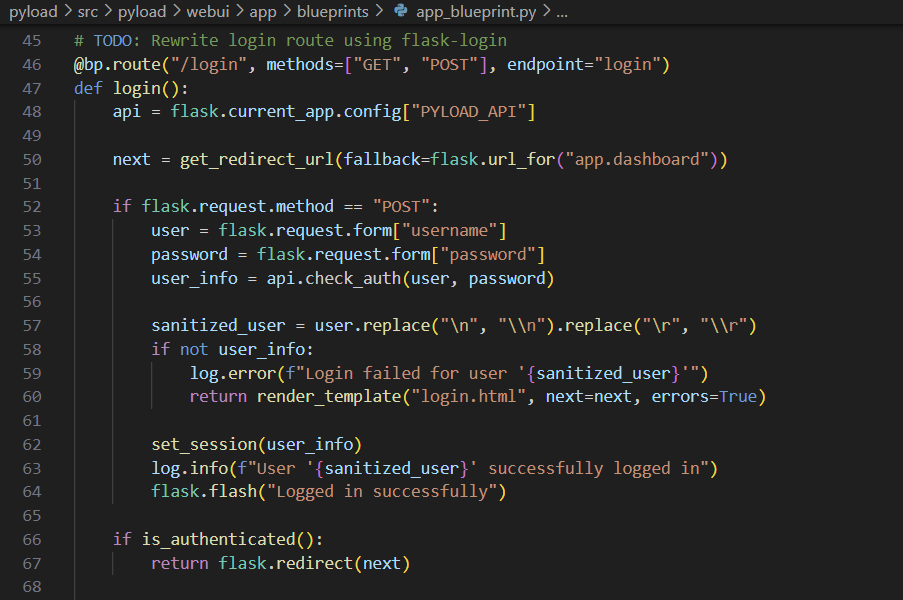
The URL entered in the next variable goes through the is_safe_url function, where a lack of validation can redirect the user to an arbitrary domain.
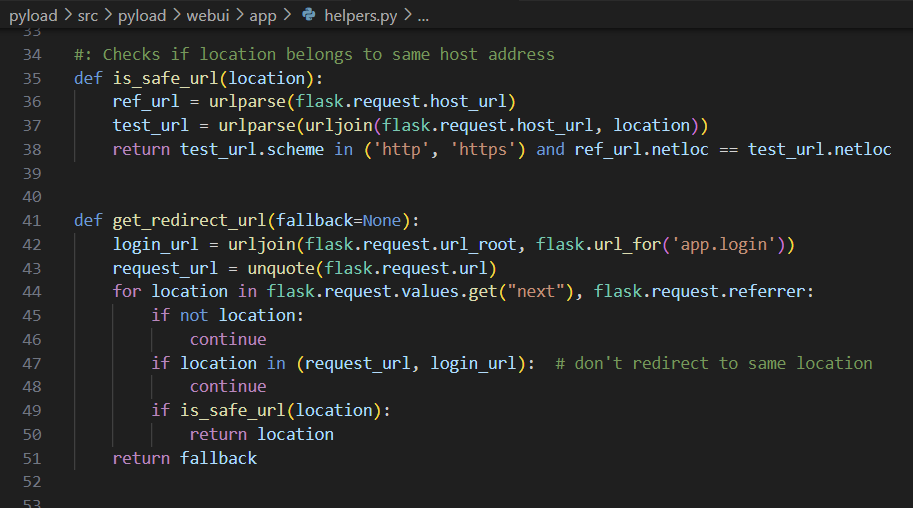
The documentation in the urllib library shows that improper URLs are recognized as relative paths when using the urlparse function. (https://docs.python.org/3/library/urllib.parse.html#urllib.parse.urlparse)
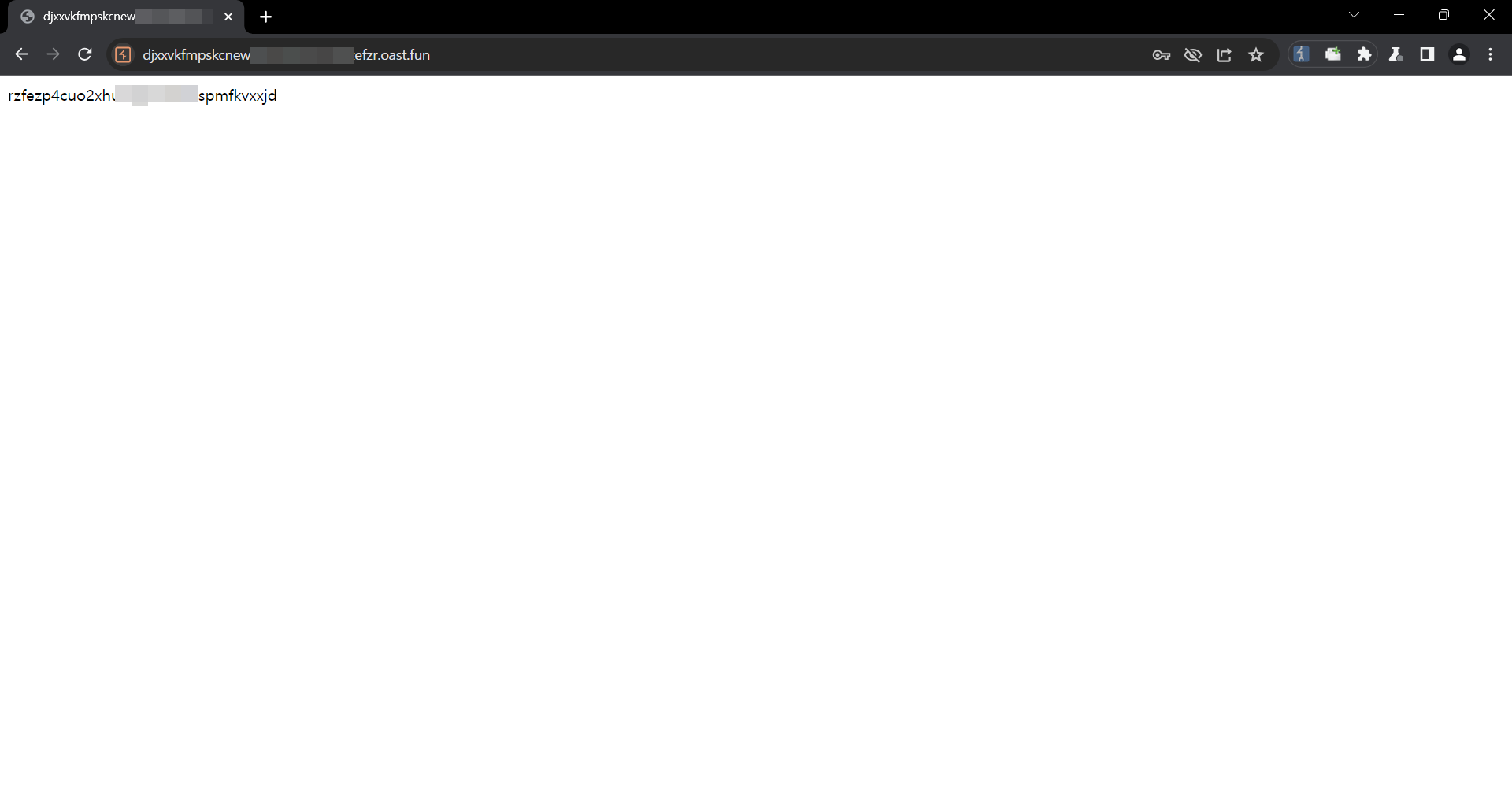
For example, When an unusual URL like https:///example.com is entered, urlparse interprets it as a relative path, but in the actual request it is converted to https://example.com due to url normalization.
PoC
1. In the next variable, insert the URL to which you want to redirect the user.
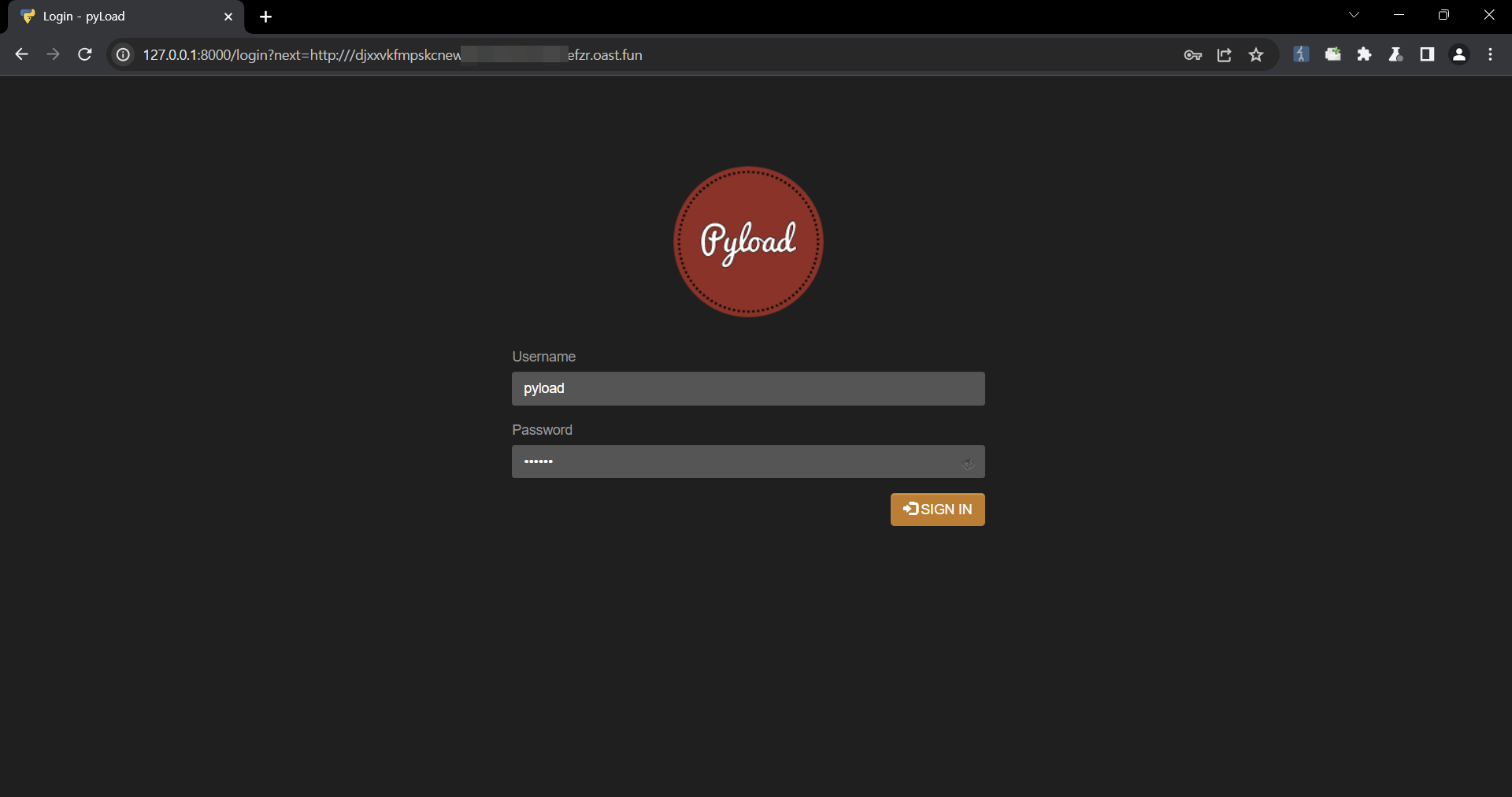
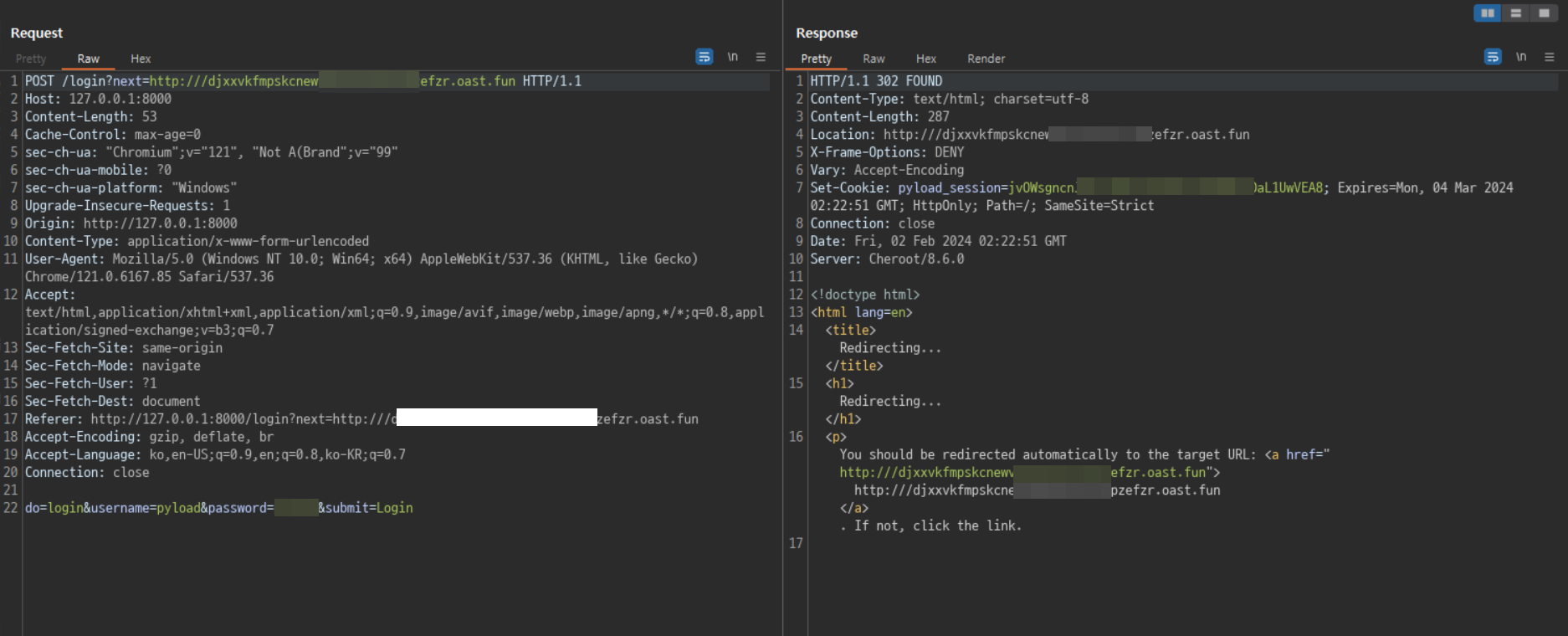
2. Check that it is possible to bypass url validation and redirect users to an arbitrary url.
Impact
An attacker can use this vulnerability to redirect users to malicious websites, which can be used for phishing and similar attacks.
How this vulnerability can be exploited
This issue can be reached over the network, attack complexity is low, an attacker needs no privileges on the target. A user must be tricked into taking some action. The scope is changed, meaning a successful attack can affect components beyond the vulnerable one. Rated impact: confidentiality low, integrity none, availability none.
Weakness class
CVE-2024-24808 is classified as CWE-601: Open Redirect. A redirect target is taken from user input, so a trusted link can send the visitor to an attacker's site.
Affected software
CVE-2024-24808 is recorded against 2 packages.
- pyload (fixed in 0.5.0)
- pyload-ng (fixed in 0.5.0b3.dev79)
Timeline and source
Published on 6 February 2024 and last revised on 17 June 2026. A public exploit is known to exist, which raises the urgency of patching considerably. A vendor advisory or fix has been published. Record sourced from NVD.
References
Details
CVSS:3.1/AV:N/AC:L/PR:N/UI:R/S:C/C:L/I:N/A:N
Affected Packages
| Software | From version | Fixed in |
|---|---|---|
| pyload | — | 0.5.0 |
| pyload-ng | — | 0.5.0b3.dev79 |
References
Similar Threats
- High CVE-2026-35464
- Critical CVE-2026-33992
- Critical CVE-2026-33511
- High CVE-2026-32808
- High CVE-2026-33509
More CVE 2024 advisories
Browse all of CVE 2024 in the advisory index.
Exploit Protection
Are you running pyload?
CVE-2024-24808 carries CVSS 4.7 Medium rating and a public exploit already exists. BotEraser checks your installation against this and other known CVE records, and blocks IPs associated with exploit activity.
Check My Site For CVE-2024-24808 →No credit card required · Results in minutes
ⓘ Data Notice: The information presented above has been compiled from publicly available internet sources. Boteraser aggregates this data solely for informational purposes and does not independently classify, evaluate, or endorse any findings about the vulnerabilities listed. The accuracy and completeness of this information is the sole responsibility of the original publishers. Boteraser and its operators accept no liability for any decisions made based on this data.







